
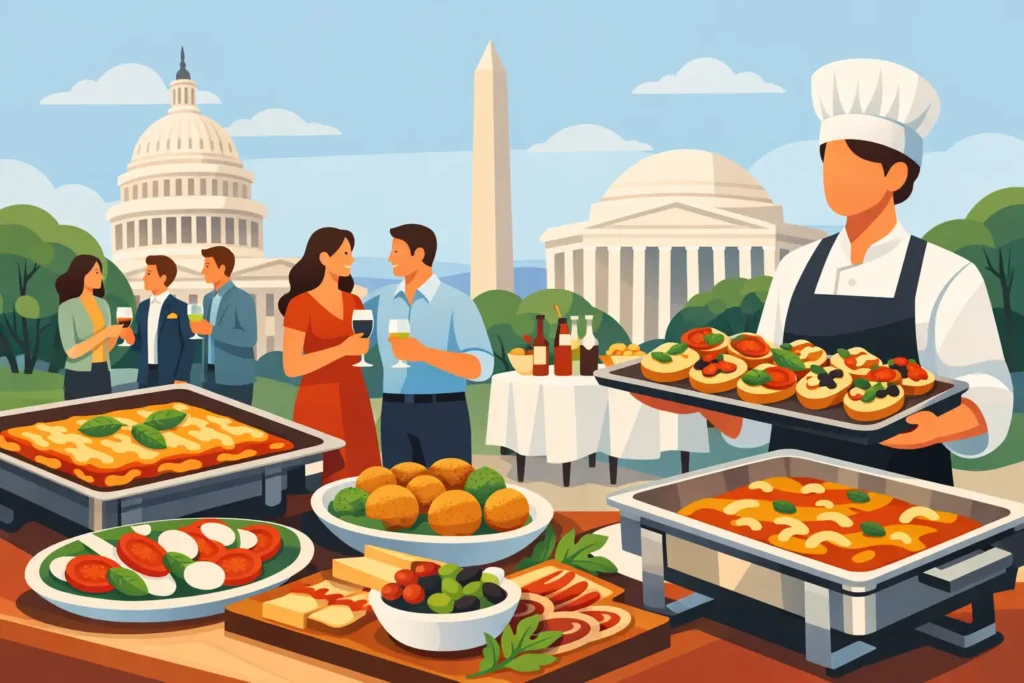
A good gathering has a moment when everyone stops checking the door, the group chat, and the clock. Someone passes the pasta, a serving dish comes back for seconds, and conversation gets louder in the best possible way. That is what Italian catering can bring to a DC office lunch, birthday dinner, family celebration, or friends’ night in: generous food that gives people a reason to settle in together.
For hosts, the appeal is not only the menu. Italian food is familiar without feeling plain, festive without requiring a black-tie setting, and flexible enough for a dozen coworkers or a room full of celebrating guests. The right order should feel abundant, arrive at the right temperature, and make your job as host much easier.
Why Italian Catering Works for So Many Occasions
Pasta, salad, chicken, seafood, and classic Italian sides cover a lot of ground. A guest who wants something comforting can reach for baked pasta or chicken Parmesan; someone looking for a lighter plate can start with salad and choose a vegetable-forward option. That range matters when you are feeding a group with different appetites, schedules, and dietary preferences.
It also suits the way people gather in Washington. An office team may need a lunch that feels more welcoming than another stack of boxed sandwiches. A visiting family may want a relaxed meal after a full day around the city. Friends organizing a birthday need food substantial enough to carry the evening, but easy enough that nobody is stuck in the kitchen while everyone else is having fun.
Italian catering is especially strong for occasions where the food should encourage sharing. Big bowls of pasta, platters of savory favorites, and fresh salads make the table look like a meal, not a transaction. That visual generosity changes the mood before anyone takes a bite.
Start With the Shape of the Gathering
Before choosing individual dishes, consider how people will actually eat. Is this a seated dinner with time for multiple courses? A midday meeting where guests have 30 minutes between calls? A drop-in celebration where arrivals will be staggered? The same menu can work very differently depending on timing and setup.
For a working lunch, keep the meal satisfying but easy to serve. One or two pasta selections, a protein-based entrée, salad, bread, and a simple dessert can create a complete spread without slowing down the afternoon. If the group will eat standing up or move between rooms, dishes that hold well and serve cleanly are usually the better choice.
For birthdays, showers, holiday parties, and reunions, plan for a little more variety. Guests tend to linger, go back for a second plate, and snack between conversations. Add appetizers or shareable starters, then balance rich favorites with a crisp salad or vegetable side. The goal is not to offer every dish on the menu. It is to give everyone a plate they will be happy to build.
A smaller dinner party calls for a different approach. Rather than ordering broadly, choose a focused menu with a few dishes that feel intentional. Think of the meal as the center of the table: a favorite pasta, a classic chicken or seafood dish, salad, bread, and something sweet to finish. Fewer choices can make the occasion feel more like a hosted dinner and less like a buffet.
Build a Menu With Contrast, Not Just Quantity
The most memorable catered meals have contrast. If you choose a rich, sauce-forward pasta, pair it with a fresh salad. If chicken Parmesan is on the table, add a pasta that is lighter in texture or a vegetable side with brightness. Bread belongs in the plan, but it should support the meal, not become the only thing guests can eat while they wait for more food.
A useful starting point is one comforting classic, one lighter selection, and one dish with broad crowd appeal. From there, adjust for the size and style of the group. For a team lunch, dependable favorites often win. For a more personal celebration, you may have room to include a house favorite or a dish that reflects the guest of honor’s taste.
Do not forget the guests whose choices require a little extra thought. Vegetarian options should feel like real dishes, not an afterthought placed beside the main spread. If allergies or other dietary needs are involved, communicate them clearly when placing the order. A caterer can only help plan around those details when they have them early.
Dessert depends on the event. For a short meeting, it may be unnecessary. For a birthday or evening celebration, it is often the final touch that keeps people around the table. A sweet ending turns a meal into an occasion.
How Much Food Should You Order?
The answer depends on the time of day, the guest list, and whether food is the main event. A lunch crowd may eat less than guests at a Saturday evening party. A group that has cocktails before dinner may arrive hungry. A gathering with teenagers, athletes, or a long guest list of big pasta fans may need more than a standard per-person estimate.
When in doubt, give your caterer the real context: guest count, event time, whether there will be other food, and how long the gathering will last. That information is more useful than simply asking for enough food for 25 people. It helps shape a menu that is satisfying without leaving you with a frustrating amount of waste.
Ordering too little is the bigger hosting risk, particularly for a celebratory dinner. A small cushion is sensible when your budget allows it. Leftover pasta can make an excellent next-day lunch. But more food is not automatically better if the event is a quick office meeting with a hard stop. This is one of those places where the occasion should lead the order.
The Details That Keep Service Smooth
Great food needs a practical plan around it. Confirm delivery or pickup timing based on when guests will eat, not simply when they will arrive. If people are expected at 6:30, a hot meal should not be sitting uncovered on the table at 5:45. Make space for serving dishes before the food arrives, and have serving utensils, plates, napkins, and beverages ready.
For office gatherings, ask one person to receive the order and identify a clear place for setup. In apartment buildings or busy DC venues, delivery instructions matter. Include the building entrance, floor, contact number, and any details that will keep a driver from circling the block while your food waits downstairs.
If the event has a bar component, think about the rhythm of the evening. Guests enjoying cocktails may appreciate appetizers or a starter course before the main meal. For a casual party, food can arrive in waves. For a seated dinner, having the entire meal ready at once may make more sense. Neither approach is wrong. The better choice is the one that fits how you want people to spend the night.
When Your Event Needs More Than Delivery
Some occasions call for a table at the restaurant rather than a spread at home or the office. A large group dinner can remove nearly every hosting task: no clearing counters, no arranging chairs, no cleanup after dessert. A private event offers more room to celebrate, and a karaoke-ready night can turn dinner into a full evening out.
Dupont Italian Kitchen has been part of the neighborhood since 1986, with options for catered occasions as well as group dining, private events, and an Upstairs Bar experience when the celebration belongs out on the town. The best format depends on your group. A client lunch may need food brought to the office; a birthday may be more fun with pasta, cocktails, and a microphone waiting upstairs.
The shared idea is simple: make the food feel like hospitality. Choose dishes people will genuinely want to eat, give them enough time to enjoy each other, and leave yourself free to join the conversation. That is how a catered meal becomes the part of the gathering people remember.

